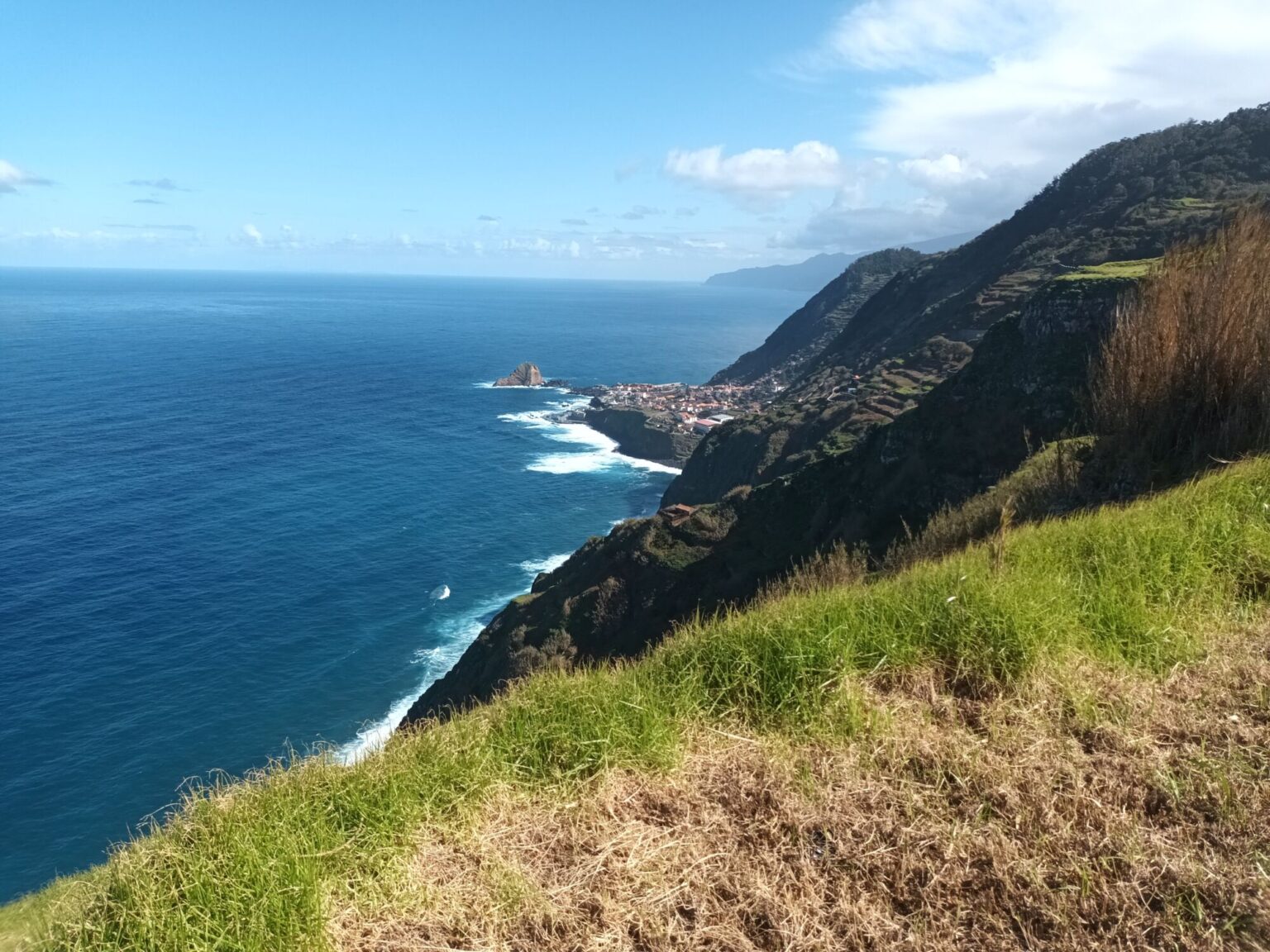
How can you earn a living in Madeira? Work, business and services that are missing here
“Madeira is beautiful. But how would I earn a living there?”
This is one of the most practical questions I hear from people considering life on the island. And I am glad when it comes up before they move.
An ocean view will not pay the bills. And a fresh start tends to feel a little calmer when, alongside an idea of where we will live, we also have a realistic idea of our income.
After several years of living in Madeira and working with people who are looking for a home here, or are only beginning to consider island life, I also see the other side: there are services I repeatedly need for myself or my clients. And finding someone available is not always easy.
So where might the opportunities be? And what is worth knowing before you pack your bags?
Skilled trades have a place on the island
If someone asked me where I personally see room for more services, I would start with the trades.
A carpenter who can make a bespoke kitchen, bed or fitted wardrobe. Someone for small building jobs. A plumber. An electrician. Someone who can repair a door or a lock, put up shelves or sort out a few little things around the house.
It is often the smaller jobs that are the biggest problem. For a major renovation, you look for a building company. But for a few repairs, you need someone who will come, take a look, give you a price and finish the job.
In my experience, opportunities in the following areas, for example, are worth exploring:
- carpentry and bespoke furniture;
- bricklaying, tiling and painting;
- small household repairs and installations — handyman services;
- plumbing and specialist technical services;
- garden and outdoor maintenance;
- swimming pool maintenance;
- regular care of houses and apartments;
- domestic cleaning;
- removals.
This is not an official list of occupations experiencing shortages. It is my experience of everyday life and working with property.
And, of course, some specialist work requires local authorisation. Describing yourself as a handyman does not automatically allow you to do everything. For specialist work, such as electrical installations, the relevant qualifications and authorisation need to be checked.
The way you provide a service can be an opportunity, too
When I look for a service provider, I want to know more than what they can do.
I also need to know when they will come. Roughly how much the work will cost. And if anything changes, I need a message letting me know and suggesting a new time.
This is not something unique to one island. But when you are setting up a home in a foreign country, you very quickly appreciate the value of clear communication.
Good workmanship, reliability and clear communication can be an important part of what you offer. English will help you reach international clients. Portuguese, in turn, will open doors to local customers, suppliers and working relationships.
Arriving with respect, getting to know the local environment and gradually building a good reputation makes more sense to me than starting out with the idea that the island is waiting for us to come and teach it how things should be done. Unfortunately, I encounter that attitude, too. But I believe that a willingness to listen and understand local circumstances, and the often difficult conditions, helps more than believing we know everything better.
Employment in Madeira: what is the reality?
Not everyone wants to run a business. For some people, an employment contract, a regular income and a chance to get to know the local environment first are a better fit. Simply having a clearly defined job and room for their own life when the working day is over.
Madeira’s labour market is active. According to the regional statistics office, unemployment reached 3.5% in the second quarter of 2026, the lowest among Portuguese regions at the time. Low unemployment alone, however, does not mean that every newcomer will easily find work in their field.
Tourism and the services connected with it play a significant role. When looking for work, it therefore makes sense to consider hotels, hospitality, customer services, or the operation and maintenance of accommodation. EURES identifies tourism as the main driver of the local economy.
But the terms of a particular offer also matter: pay, working hours, shifts, commuting and the languages required.
As a starting point: the regional minimum wage in 2026 is 980 euros gross per month. Before deciding to move, I therefore recommend comparing a real job offer with the actual costs of housing and living.
You can look for vacancies through, for example, the Instituto de Emprego da Madeira — IEM and the EURES network.
Teachers and healthcare professionals: qualifications and language are decisive
Education and healthcare are other areas that people interested in working on the island may consider. Here, however, it is necessary to distinguish between specific professions and the conditions for practising them.
A schoolteacher, a private language tutor and someone offering extra tuition are not the same in terms of the rules. Practising the regulated teaching profession involves recognition of foreign professional qualifications.
Similarly, it is not accurate to say that you need Portuguese in the public healthcare system, while English is automatically enough in a private clinic.
Doctors, for example, need to register with the Portuguese professional body and, under the relevant rules, also provide evidence of language skills. This applies to work in the private sector as well. English can be a major advantage when communicating with international patients, but it does not replace professional requirements.
If you work in a regulated profession, start by checking whether and how you can practise it in Portugal. Only then does it make sense to plan a specific route into work.
What about transport and other services?
In everyday life, I also see room for better connections and more accessible transport. Particularly when you need to travel between smaller towns and villages, or outside peak times.
The island does have public transport, connected through the SIGA network. My concern is more about how well a particular connection meets the needs of someone who lives and works here.
But there is still some distance between identifying a problem and building a viable business. In transport, for example, buying a car and starting to offer paid rides is not enough. You need to check the relevant authorisations and conditions.
I would approach other ideas in the same way: first find out exactly whom the service is intended to help and how much they would be willing to pay for it.
Something we personally miss may not attract enough demand to provide a living all year round.
What if your work does not have to be local?
When thinking about life in Madeira, it is worth asking yourself one more question:
Do I need to find an entirely new source of income on the island, or can I continue doing what I already know?
For some people, remote work, their own online services or a business serving clients outside Madeira may offer a way forward.
It is not an option for every profession. But if it is available to you, it can make the transition easier and give you time to get to know the island without the pressure of having to build a new client base within a few weeks.
Working for clients abroad does not, however, mean that Portuguese obligations do not apply to you. When moving, you need to deal correctly with tax residence and social insurance.
Among other things, Portuguese rules take account of a stay of more than 183 days during the relevant twelve-month period. But tax residence can also arise during a shorter stay if you have accommodation here that, in the circumstances, serves as your habitual home. Simply counting days is therefore not enough.
As a Portuguese tax resident, you generally also declare foreign income. How it is taxed and how tax paid in Czechia is taken into account depend on the type of income, the relevant double taxation agreement and your particular circumstances. It is therefore not automatically a matter of simply paying the difference between Czech and Portuguese tax. I recommend discussing this with an accountant who understands cross-border income.
Trading in your own name, or setting up a company?
You do not always need to set up a company to get started.
In Portugal, you can work as a trabalhador independente, meaning a self-employed person. You will often come across the term recibos verdes, named after the documents used for invoicing. It is also possible to operate as an individual business owner, an empresário em nome individual.
Another option is a single-member company — sociedade unipessoal por quotas — or a company with several members, a sociedade por quotas, Lda. Your choice affects administration, taxes and liability for obligations.
Self-employed activity must be registered with Finanças no later than the day it begins. For your particular field, you also need to check licences and any other conditions.
I would therefore arrange an initial consultation with a local accountant before starting a business. They can help you choose a suitable structure based on what you will do, for whom and with what costs.
A first year without social insurance contributions? Yes, but let us be precise
You may have heard that you pay nothing in your first year of self-employment in Portugal.
It is not that simple.
When you first enter the self-employment scheme, compulsory social insurance normally takes effect on the first day of the twelfth month following the month in which you started the activity. You can also apply for coverage to begin earlier.
This initial relief, however, concerns social insurance contributions. It does not automatically mean exemption from income tax, VAT or other obligations. Nor can it automatically be extended to a newly formed company and its director.
Any VAT exemption also has its own conditions. It is necessary to distinguish between income tax, IRS, VAT, IVA, and contributions to Segurança Social.
How does health insurance work?
Czech readers are often surprised to discover that the system of separate monthly advance payments to a health insurer used in Czechia does not operate in the same way here.
But it is not accurate to say that healthcare is simply “part of social insurance”.
Public healthcare is funded from public budgets. Social insurance covers, among other things, pensions and, where the conditions are met, cash benefits during illness or parenthood. Payment for medical care and sickness benefit are different things.
When moving, you therefore also need to arrange registration with the healthcare system and establish your entitlement to care according to your own circumstances. In Madeira, you contact SESARAM and your local health centre.
What would I recommend before moving?
Before building your plan around “I will find some way to earn a living there”, try answering a few specific questions:
- What can I offer, and who will my customer or employer be?
- Do I need to have my qualifications recognised or obtain authorisation?
- Which languages can I genuinely work in?
- How much do I need to earn each month after costs?
- How many jobs or working hours does that mean?
- Do I have savings to cover the time before I secure a stable income?
For a business, I would start with conversations with potential customers. For employment, with specific vacancies and discussions with employers.
You can gain some initial experience before making a permanent move. And sometimes that practical check reveals that the plan needs a little adjustment.
Madeira can be a place for a fresh start
I do not believe that everyone can earn a living in Madeira doing any kind of work. Equally, I do not believe that working online or renting out an apartment is the only way.
I see room for people who have a skill, are willing to get to know the local environment and can offer their work to those who need it.
Some bring a trade. Others bring experience in a specialist profession. Others keep their existing clients and gradually build further working relationships on the island.
A fresh start does not have to mean starting your professional life from scratch. Sometimes it means finding a new place for the skills you already have.
But the question “How will I earn a living?” is often part of an even bigger question: How do I actually want to live from now on?
Especially when it comes after divorce, the loss of a loved one, leaving a toxic relationship or losing a job. At a time when the certainties we relied on fall apart and we need to find a new direction.
I know from my own experience that Madeira can give a person space. To breathe, hear their own wishes and gradually become clear about what they want to create next. And if life has already brought us to a major change, why not take the path that calls to us most — even if we have no idea yet what we will encounter along the way?
For me, that path involves the courage to take the first step, the humility to learn and the discipline to turn wishes into everyday actions. We do not need to know all the answers in advance. We can find them gradually, while building on the experience and abilities we already have.
If you are thinking about life in Madeira, I would be happy to help you connect your ideas about a home with the everyday reality of the island. So that, alongside a beautiful view, your plan also has firm ground beneath its feet.
Information about regulations and the labour market is based on material checked in October 2026. Personal observations about opportunities are not a guarantee of a job or an income.